
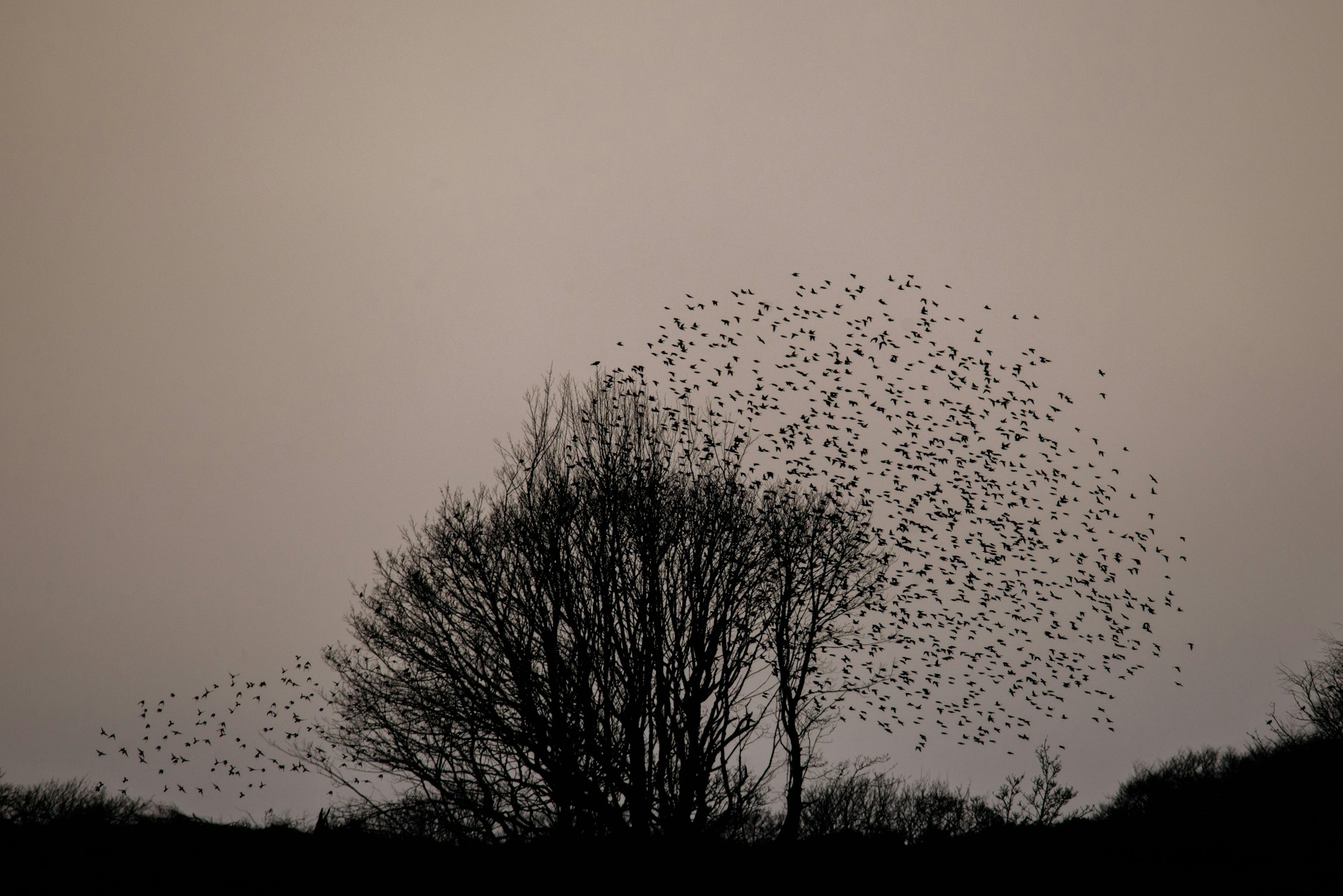
Few wildlife experiences compare to a starling murmuration. As thousands of birds sweep and twist across the sky in shifting, fluid shapes, the whole flock moves like a single living organism like a wave. It’s a moment that feels both ancient and alive, and it’s one of the most accessible wildlife spectacles in the UK.
You don’t need binoculars, specialist knowledge, or long hikes. All you need is the right place, the right time of year, and a willingness to stand quietly as dusk settles. This guide walks you through when murmurations happen, where to see them, and how to enjoy them without disturbing the birds.
If you’re fascinated by bird behaviour, our Spring Wildlife Behaviour guide explains why certain species gather, display, and move in large groups.
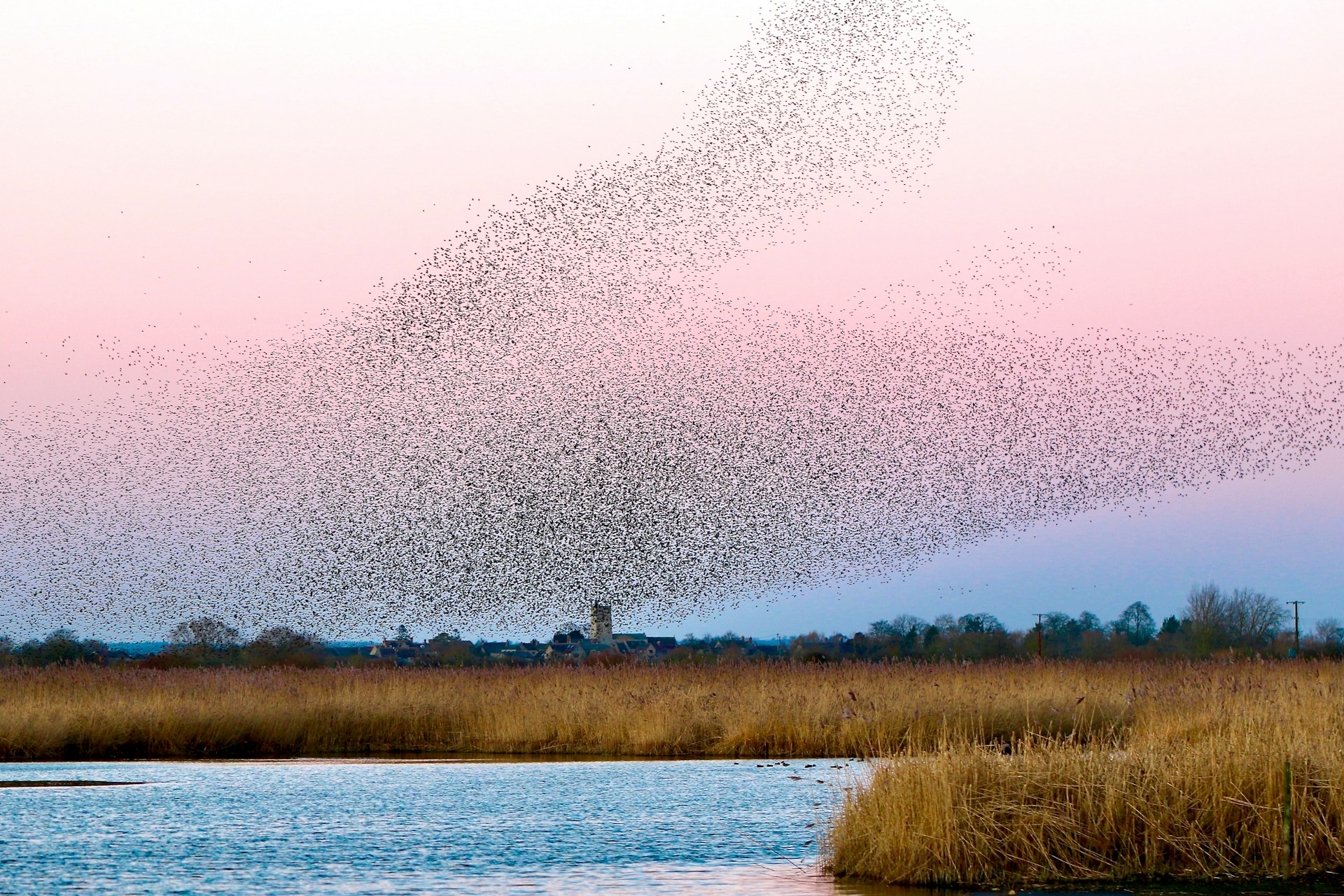
Murmurations are more than just beautiful, they’re a survival strategy.
Starlings gather in huge flocks to:
The swirling shapes are created as each bird responds to the movement of its nearest neighbours, a kind of airborne choreography.

Murmurations happen mainly in the colder months.
Best season: November to February
Best time of day: Just before dusk, usually 30–45 minutes before sunset
Best weather:

Starlings gather near safe, sheltered roosting sites. Some of the best places include:
Wetlands & Nature Reserves
Coastal Piers & Seafronts
Urban & Semi Urban Sites
Manchester & Liverpool outskirts: surprising urban roosts
Woodlands & Reedbeds
If you see starlings gathering on wires or rooftops at dusk, you may be near a murmuration site.
1. Arrive early
Give yourself time to settle, find a good viewpoint, and let the landscape quieten.
2. Stand still and let the birds come to you
Murmurations often build slowly — a few birds at first, then hundreds, then thousands.
3. Watch the sky, not just the roost
The flock may appear from any direction.
4. Listen as well as look
The soft rush of wings and the chatter of birds settling to roost are part of the experience.
5. Stay until the end
The final “drop” into the roost is often the most dramatic moment.
To deepen your birdwatching skills, our How to Identify Bird Songs for Beginners guide can help you recognise species long before you see them.

See our Beginner Binoculars Guide for simple advice on choosing your first pair, including what magnification means, how much to spend, and which models are genuinely beginner‑friendly.
See our Field Guides Gear Guide for simple advice on choosing beginner friendly wildlife books, including general wildlife guides, bird guides and pocket guides.
These items can also be really helpful for beginners:

As the flock begins to gather, pause for a moment and note:
“What shape or movement in the murmuration stays with me the most — and why?”
It might be a sudden wave, a tight spiral, or the moment the flock drops into the roost. Journaling helps you hold onto the feeling of the experience.
If you’d like to start a simple nature journal, our beginner’s guide walks you through how to begin: How to Start a Wildlife Journal.

Murmurations are sensitive events. A few gentle principles help protect the birds:
This calm, hands off approach is at the heart of NatureGuide.
A starling murmuration is one of nature’s great communal performances, a moment where thousands of birds move as one, painting shifting patterns across the sky. When you stand quietly at dusk and let the spectacle unfold, you’re witnessing something ancient, instinctive, and deeply moving. By watching gently and respectfully, you become part of the stillness that makes the murmuration possible.